
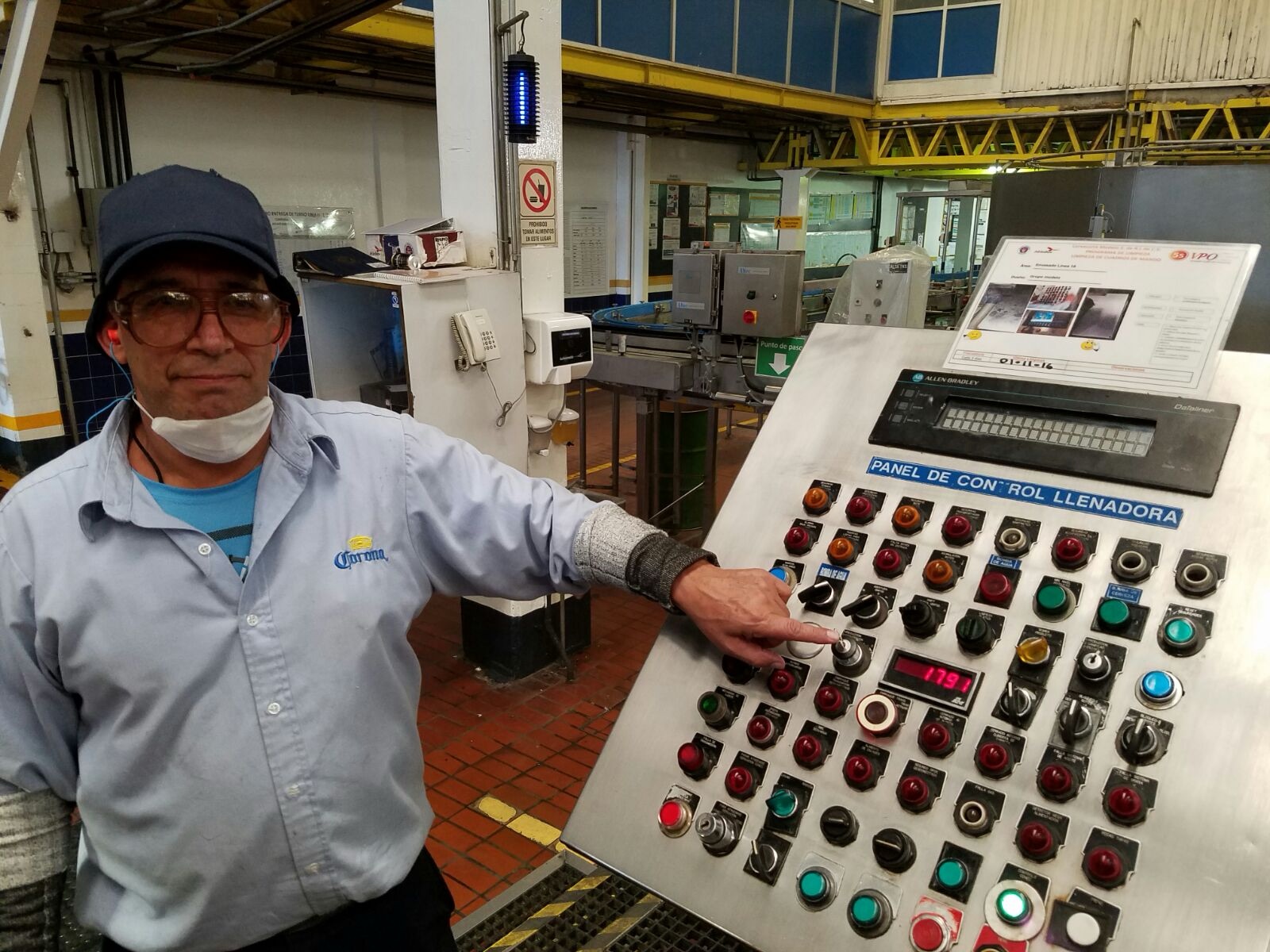
The first light of day barely pierced the fog coiling around the low hills along the Sassandra River as I pulled up to the brewery’s security gate at 5:10 a.m. The distant roar of the river was lost to the early hums of machinery: diesel engines in idling delivery trucks, the warning beep of forklifts, the metallic rasp of compressors waking up for another relentless day. Stepping through the gatehouse, notepad and DILO observation sheets pressed under my arm, I expected to measure machine cycles, analyze downtime, and track operator routines. I didn’t expect to confront the real sources of the plant’s troubles—minutes and hours lost in the places hardest to see: the cracks between procedures, the journeys for missing tools, the frustrations born from flawed materials.
Three years earlier, this plant had been inaugurated as the pride of the region—a visionary leap into modern brewing for Côte d’Ivoire. Its bottling line, a state-of-the-art acquisition from Nigeria, had promised leapfrog performance. Yet, when I arrived that morning, the line’s reputation inside the company had shifted from pride to tacit embarrassment. The numbers weren’t lying: operational efficiency lagged below 70%, maintenance consumed entire weekends, and the rhythm of missed goals had begun to corrode workforce morale. I was there, as a process analyst new to brewery floors, to observe, investigate, and distill the reasons for these chronic losses.
Meeting Kouakou: Trust, Experience, and First Impressions
The first sunbeams began angling through the broad glass walls as I met Kouakou McDotta—a senior operator, tall and sinewy, his white uniform tinted with permanent gray around the cuffs and collar. He was perched on a workbench beside his manager, Eric Bohiri, the two locked in a low, urgent conversation about missed production targets and the prior night’s breakdown. Kouakou’s handshake was brisk, almost perfunctory. He sized me up and offered a challenge more than a greeting.
“First time in a brewery, right?” he prodded. I nodded, bracing for skepticism. Before I could introduce myself fully, he reeled off a litany of questions—model numbers, breakdown frequencies, settings for the filler’s pressure tanks. When I admitted I’d never followed a DILO inside a brewery, he smirked, shook his head, and wordlessly began gloving up for the shift ahead. I understood, then, that credibility on this floor wasn’t conferred by title, only by eyes open and sleeves rolled up.
We watched, together, as the 5:45 a.m. shift briefing began. Eric outlined targets and priorities: today’s volume, the compressed timeline demanded by a delayed shipment of empty bottles, and the pressure to prep for an executive tour scheduled for later in the week. Around the huddle, operators nursed small paper cups of coffee, trading quiet jokes and glances thick with tension—a team exhausted by the grind of targets that never seemed to align with reality.
Changeover: The Lost Hour
The day’s first pinch appeared almost immediately, tucked not in a breakdown, but in the everyday ritual of the first changeover. The bottling line alternated between two main SKUs—a lager in clear glass and an amber in brown. Today, the order from scheduling called for the lager to run first, with an ambitious transition to the slower-moving amber scheduled for noon.
By 6:00 a.m., the line rumbled to life and bottles flew past the rinser like a school of glass fish—Kouakou’s hands steady over pressure dials, eyes hawkish for any sign of mechanical drama. The entire team’s cadence was brisk, polished. Yet by midmorning, the inefficiency lurking within the changeover process became painfully clear.
At 11:20, with the day’s first major SKU switch imminent, a ripple of constraint swept the team. The format change called for not just bottle switchover but manual adjustment of filler heads, a reset of the labeler, and most importantly, a switch of cap types. A laminated “Changeover Standard Work” sheet hung by the line, outlining what should have been a 28-minute process. But reality, as ever, was messier.
The team fanned out to retrieve the required change parts—nozzles, capper jaws, label cassettes. Half the pieces were not where they should be. Over the next 35 minutes, I tracked three operators who drifted from the bottling hall to a side storeroom, then doubled back to a mezzanine storage cage after discovering a crucial filler part was missing from inventory. Two calls to maintenance, one to a team leader, three false starts back at the change table—by the time all the parts were assembled, 46 minutes had leaked away.
Kouakou’s patience showed its first cracks. “You see? We spend as much time searching as fixing. Parts should be kitted, but the last team never returns them. Always someone else’s problem.”
By noon, after another ten-minute struggle to align the capper on the new bottle height, the line sputtered back—the actual changeover taking nearly three times the target. In the day’s log, I annotated: “Changeover target: 28 minutes. Actual: 73 minutes, including 14 minutes of pure transit between locations. Root causes: missing parts, disorganized storage, unclear handoff from previous shift.”
The cost wasn’t just time lost, but momentum lost. It seeded frustration that colored every action in the hours that followed.
The True Cost of Travel Time: Material Misplacement
Shortly after the changeover dust settled, a second challenge emerged—a case study in lost motion that would repeat throughout the observation. Around 1:30 p.m., a low-level alarm buzzed; the filler was starved for cartons. Kouakou flagged a rookie operator, telling him to “go pull reserve cartons from the west storage.” Ten minutes later, the operator returned, empty-handed and sweating—wrong storage. It took another fifteen minutes and help from a forklift driver to locate the right carton batch in an overflow aisle on the loading dock, displaced the day before by an unscheduled delivery.
Meanwhile, the line idled. Eight workers waited—some cleaned, others checked emails, one leaned over the mezzanine railings aimlessly. The culprit? Disorganized material handling and a lack of clear labeling on fast-moving consumables. All told, 28 minutes slipped away as the cartons meandered via forklift through the plant, the operator’s embarrassment met only by Kouakou’s weary sigh.
“Materials weren’t always this hard to find,” Kouakou muttered. “When production was lower, we could make do. Ever since volumes went up, we just run out of space and patience.” In my field notes, I logged the broken chain of information: “Material restocking is ad hoc and reactive; no visual control in main storage areas. Suggest 5S audit + replenishment mapping.”
Unscheduled plant tours from supply chain staff never seemed to coincide with such moments; perhaps if they did, the gaps would be easier to close.
Raw Material Quality: Brewing Problems at the Source
As the afternoon wore on, another, more insidious problem materialized—less visible but even more costly. The plant’s latest batch of malt extract, delivered from a regional supplier, had arrived with an off-putting visual haze. Initial tests in QA had flagged slightly higher-than-normal sediment, but, under pressure from procurement to keep the line running, production released the lot.
At 2:45 p.m., as the filler ran at full speed, Kouakou halted the conveyor after spotting foam rising in several bottles just past the automated inspection cell. The team leader joined in. Within minutes, a cluster of bottles showed visible sediment clinging to the glass. QC’s on-call chemist was paged. The entire line paused—first for five minutes, then for fifteen, then, as a debate raged over whether to quarantine the material or attempt rework, for a full forty minutes more. The discussion unfolded in tense bursts: should they re-filter the batch? Override inspection? Call in the plant manager?
In those moments, the true cost of “near enough” quality showed itself. With every extra minute, opportunity costs ballooned—lost throughput, overtime for downstream packaging, interrupted maintenance windows. “It happens too often,” Kouakou confided later, his frustration now visible. “Quality issues at the start. We rush, re-test, quarantine, rework. Why does it leave the supplier at all?”
I noted the incident’s anatomy: “Raw material issue ID’d mid-run. Line down for 42 minutes, 26 operators idle, urgent supplier call placed, 338 liters at risk of rework. QA recommends supplier performance review.”
A Day in Relentless Motion
By late afternoon, the compounded fatigue from all these lost pockets of time began to show. The plant’s temperature soared. Operators’ faces tightened in the static air, their jokes faded to an occasional grunt. The downtime tracker, displayed on a wall-mounted tablet, showed a sea of red blips: changeover overrun, carton search, QC hold, adjustment after filler stutter.
And yet, in the midst of chaos, Kouakou continued his dance—never hurried but always striving, hands steady, voice carrying calm through the bottling bay. He moved in practiced arcs, tracing invisible efficiency in a system that seemed bent on wasting it. His radar was unerring: a high-pitched whine in the capper signaled an imminent jam; a subtle shudder in the filler portended another breakdown. Each time, he intervened, reducing what could have been a 15-minute stoppage to a quick 3-minute tap and reset. But each rescue cost him something—a bit more patience, a bit less faith in the line.
“A good day is when I know what will break, and I control when,” he told me around 4 p.m., mopping sweat from his brow. “A bad day is when things break before I even see them coming.”
The People’s Story: Resilience in the Shadows
In the micro-pauses between work, Kouakou’s story unfolded in pieces. His pride in troubleshooting. The camaraderie among the line crew. The running joke about “finding the sacred filler seal” after every changeover. He spoke of nights spent dreaming about breakdown alarms, of weekends lost to emergency call-ins.
The other operators, too, revealed their own quiet heroisms. Marie, the shift’s only female technician, lugged a 20kg carton of caps across the floor after yet another mix-up in part storage. Althe, a maintenance apprentice, stitched together a makeshift gasket with repurposed tubing while management debated whether to wait for parts from Abidjan. This was not just a crew, but an ad-hoc family—resolved to improvise as needed, surrendering personal time and energy each shift to keep beer flowing to Sassandra’s markets.
Their frustrations did not manifest in open complaints, but in fleeting glances: the subtle eyeroll when a supervisor glanced at the target board, the half-swallowed joke about “the magical changing location of parts,” the visible tension in Eric’s jaw when he signed off on another QC incident report. These moments, invisible to headquarters, prescribed a slow drip of disengagement—one rarely visible in dashboards, but palpable in every pause, every redundant errand, every shift spent guessing what would go wrong next.
End of Shift: Reflection, Empathy, and Unfinished Business
At 6:05 p.m., as the shift wound down, I invited Kouakou to debrief over cold water in the breakroom. Spread before us were DILO sheets scrawled with time stamps, context notes, and sketches of workflow diagrams that now looked more like tangled circuits than a recipe for beer.
He scanned the notes slowly. “You see the losses, yes,” he murmured. “But it’s not just the machines. It’s time hunting parts, time fixing what should have worked, time fighting poor raw materials. It’s time managers never see—they only see the numbers, never the chase.”
He pointed to the changeover section. “That wasted hour? It’s a fight handed to us—bad system, not bad people. And the cartons, we spent half an hour running circles because someone relabeled the aisle and never told night shift. We are here to make beer. But most days we are hunting, not brewing.”
His voice softened as he reflected on the day’s tempo. “People want to help; nobody wants to waste time. But until the system fits the work, and the work matches the people, we will always be catching up.”
In those words, the root of the plant’s challenge came clear. Downtime is not merely stopped machines; it is the sum of disconnection, miscommunication, and the corrosive effect of short-term fixes. It was, quite literally, the cost of lost time—time spent walking, searching, waiting, and wondering why things weren’t as they should be.
Lessons from a DILO: Beyond the Numbers
When I left the plant that evening, residues of malt and fatigue clung equally to my clothes. My notebook bulged with notes, diagrams, and anecdotes—a record of a day shaped by both quantitative and qualitative waste. I also carried a more subtle realization: these moments of friction, these hidden “lost minutes,” chained together into hours and then into days, ultimately shaped the plant’s destiny more than any one catastrophic stoppage ever could.
True optimization, I now understood, begins not just with diagrams and benchmarks, but with empathy—with seeing the lost hours for what they really are: the lived experience of people squeezed between flawed systems and higher expectations.
I left knowing that my next visits—to the night shift, maintenance crew, and raw materials warehouse—would only add new layers to the story: more time lost, more opportunities hidden, more hope in every small fix. But I also knew that nothing would replace the insight won beside the bottling line, shoulder-to-shoulder with people whose daily improvisations sustained not just production, but dignity.
The story of the Sassandra Beer Plant isn’t the story of inefficient machines alone. It is the daily chronicle of hunting for the right parts, the tension of fixing what should have stayed fixed, the collective fight against poor materials, the minutes stolen in search of what was missing. And woven through it all is the hope that, with clearer vision and shared purpose, each lost minute might not be lost forever.
Understanding DILO Studies: Seeing Work as It Truly Happens
The DILO study (Day In the Life Of) is both a methodology and a mindset. It invites managers, engineers, and analysts to step away from dashboards and process flowcharts to experience operations firsthand. Its genius lies in its simplicity: one observer, one worker, one day of real-life observation. Yet, within that simplicity lies a powerful engine for change. When applied at the Sassandra Beer Plant, DILO became a mirror reflecting the hidden truths of efficiency, culture, and human ingenuity that no system report could ever capture.
From Concept to Practice: What DILO Really Is
DILO was created to reveal the operational reality behind the performance numbers—how work actually gets done versus how it’s supposed to be done. It focuses on fine-grained, time-based observation, typically broken into intervals of five minutes. Each entry documents two critical dimensions of work:
– Activity Tracking: what the operator is doing (loading materials, adjusting equipment, communicating, waiting).
– Context Analysis: why that action occurred (missing parts, unclear instructions, safety check, or lack of coordination).
At Sassandra, this method uncovered patterns far more revealing than classic process audits. For instance, during a 12-hour DILO observation, one operator spent a total of 84 minutes walking—not as part of his job description, but to locate displaced tools and materials. In another case, a supervisor spent almost an hour manually updating shift logs because the digital tracking system froze mid-day. These fragments of wasted time, invisible on performance charts, were the very arteries through which efficiency quietly leaked.
Building Trust: The Human Side of Observation
A successful DILO begins not with a stopwatch, but with trust. Workers must understand that the goal is discovery, not evaluation. During the first moments at Sassandra, the observer sat with Kouakou McDotta—a senior operator on the bottling line—to discuss the purpose of the exercise. Kouakou’s initial defensiveness softened as the conversation shifted from “tracking performance” to “understanding work barriers.”
That mindset shift was transformative. Once he realized the observation was about system flaws, not personal scrutiny, Kouakou openly demonstrated how frequent changeovers forced him to improvise with parts, or how late maintenance interventions drained production time. By mid-morning, he was volunteering insights unprompted—showing the observer how the filler pressure fluctuated unpredictably after startup because of air leaks that had never been formally logged.
Similar experiences appear in other industries. At a Canadian paper mill, maintenance technicians initially resisted DILO observation until they saw that the findings led to improved shift handovers and pre-staged tools. Within weeks, technicians were requesting additional DILOs to document their pain points. When employees are treated as analytical partners rather than subjects, their expertise becomes the project’s most valuable data source.
Making the Invisible Visible: Examples of Revealed Inefficiency
Once observation begins, DILO transforms into a lens that reveals things no metric will show. At Sassandra, the method exposed three primary categories of invisible loss:
1. Search time:
During one shift, operators lost nearly 50 minutes searching for changeover kits. The storage layout, rearranged months earlier after a safety audit, no longer matched the visual labels at shift level. Mapping the time flow illuminated not a worker failure, but a design flaw in logistics. After management used DILO findings to implement color-coded bins and defined parking zones for components, average changeover time dropped by 40%.
2. Waiting time:
During a scheduled label roll change, the DILO observer noted a 17-minute pause while waiting for forklift delivery. The forklift driver, meanwhile, was fetching raw malt for another line—a classic example of unaligned priorities. Once patterns like these surfaced, leadership piloted synchronized scheduling between logistics and production, virtually eliminating cross-departmental waiting.
3. Rework and workaround:
The DILO documentation also exposed what Kouakou called “everyday heroics”—small improvisations that compensated for system weaknesses. One worker applied manual pressure to stabilize vibrating bottles near the sensor area—a trick learned over years. When engineers saw this, they concluded that the vibration dampers had been under-torqued since installation. A minor hardware fix solved what had been a recurring mystery fault.
These examples underscore DILO’s distinguishing value: it connects every minute of ground-level experience to systemic implications that numbers alone can’t trace.
The Debrief: Turning Notes into Narrative Insight
The true turning point in any DILO comes at the end of the observation day, when the observer and subject sit down together for reflection. At Sassandra, reviewing the time log with Kouakou revealed the underlying logic in what first appeared to be random time losses. Each delay made sense once contextualized—poor materials handling, incomplete scheduling communication, and unclear maintenance ownership were not separate failures but interconnected results of a fragmented operating system.
This joint reflection converts observation into ownership. When Kouakou realized how much of his time was consumed by tasks unrelated to production, he became an advocate for change. His team later co-designed a “shift-start board” that visually summarized equipment status, required materials, and maintenance needs—an idea born directly from DILO findings. Within three weeks, daily start-up readiness improved measurably, and unplanned downtime decreased by nearly 9%.
Turning Observation into Organizational Change
DILO’s value doesn’t end with one operator’s notebook. Its insights scale across departments because they expose universal inefficiencies that manifest differently across roles. At Sassandra, after three DILO cycles involving operators, maintenance staff, and shift supervisors, several plant-wide improvements were implemented:
– Organized Changeover Kits: Pre-packed tools and standardized sequences reduced transition waste.
– Maintenance Windows Based on Real Usage: Instead of rigid kaizen-scheduled shutdowns, technicians began timing interventions based on run-data observed during DILO.
– Improved Material Labeling: A unified color scheme and improved barcode system cut retrieval time by 60%.
– Cross-functional Briefs: Operators now meet daily with logistics leads to align supply timing with scheduled runs.
A similar success occurred in a European food packaging company. Their DILO revealed that operators lost 90 minutes per shift logging temperature readings manually on outdated software. After digitizing the process with QR codes, the same data collection took less than 15 minutes. The ROI of the DILO was achieved within two months.
The Human Connection: Where DILO Outperforms Data Analytics
Unlike automated monitoring, DILO embraces empathy as a data source. It captures not just quantitative time loss but qualitative strain. At Sassandra, every five-minute note represented a story—of resilience, frustration, teamwork, or resourcefulness. By blending emotion with evidence, leaders could finally see how process flaws impacted morale. When maintenance teams saw that operators were staying 30 minutes past their shifts to reset lines quietly, they responded by introducing small recognition practices—one round of applause for every 24-hour breakdown-free cycle. That cultural acknowledgement, born indirectly from DILO, yielded higher engagement scores within months.
It’s this fusion of analytics and empathy that makes DILO irreplaceable. Machines report “when.” Data systems infer “what.” But only observation reveals “why” and “how,” especially in the subtle interactions between people and systems that shape performance.
Sustainable Impact: Why DILO Endures
Even after the initial study concluded, the Sassandra Beer Plant decided to incorporate DILOs quarterly—not as audits, but as learning events. Each quarter, a manager would shadow a different role to renew understanding of the daily realities driving metrics. Over time, this simple routine evolved into a new leadership behavior—presence-led management.
In other industries, DILO has achieved similar long-term transformations. A logistics company used recurrent DILOs to identify bottlenecks in its warehouse picking routes, leading to a 15% throughput increase. A healthcare provider applied DILO to nursing workflows and reduced discharge processing time by 30 minutes per patient. Each case reaffirms the same truth: when leaders observe work as it truly happens, improvement stops being theoretical and becomes deeply human.
Beyond Data, Toward Understanding
The DILO study at the Sassandra Beer Plant uncovered more than lost minutes—it uncovered the reality of interdependence between people, process, and performance. It reminded leaders that operations are not driven solely by machines or systems, but by human judgment, adaptation, and care. The methodology’s true benefit lies in its power to connect analytics to empathy, transforming observations into shared ownership of better ways of working.
DILO doesn’t just map time—it rebuilds trust, reveals opportunity, and ignites change from the ground up. When an organization learns to see work through the eyes of its people, even a single day of observation can reshape the trajectory of its future.
MB
Leave a Reply